Focus on heavy equipment
Focus on heavy equipment


Bentonite is a clay mineral with a high montmorillonite content, which has high water absorption, swelling, ion exchange capacity and thixotropy, etc. These characteristics make bentonite have important applications in machinery, metallurgy, chemical industry, food, environmental protection and other fields. Drying bentonite is necessary mainly to remove moisture so that it can reach its best performance and play its role in moisture absorption, adsorption, stabilization, etc. in subsequent applications.

For bentonite drying, the traditional natural drying method is inefficient, has a great impact on the environment, and causes serious pollution, while the bentonite clay dryer solves these problems well. The bentonite clay dryer achieves the purpose of drying by evaporating the moisture in the bentonite with high-temperature hot air. The hot air furnace burns fuel to generate high-temperature flue gas, which enters the dryer for heat exchange to form high-temperature hot air, which then transfers the heat to the bentonite through the heat exchange equipment to evaporate the moisture, thereby achieving the drying effect.
The bentonite clay dryer adopts a new type of combined lifting device to improve the material filling rate and residence time, increase the contact area between particles and hot air, and improve the heat utilization rate. Compared with traditional dryers, the thermal efficiency is increased by 40%~50%, the power consumption is reduced by about 45%, and the energy consumption is reduced. The countercurrent drying process is adopted to avoid moisture returning to the material and improve the drying efficiency.
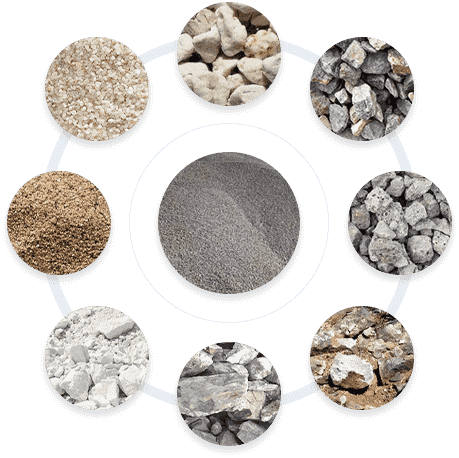
Bentonite dryer is suitable for drying bentonite, kaolin, clay, slag, sand and gravel and other materials. It is widely used in building materials, metallurgy, chemical industry and other industries. For more information about bentonite clay dryer, please feel free to contact us.
Desulfurization gypsum from power plants is an industrial by-product of flue-gas desulfurization. Characterized by high moisture content and a tendency to clump, it easily reabsorbs moisture and hardens when stockpiled. Long-term open-air storage not only
Foundries recycling used moulding sand often face one critical choice: standard single rotary dryer or three‑pass (triple‑drum) dryer. Both can dry reclaimed foundry sand, but their fit differs sharply based on your sand type, space, energy budget and qua
Many small limestone and heavy calcium carbonate processing plants have limited space and budgets. Large rotary drum dryers are unsuitable, and civil engineering modifications are expensive. Blindly investing in large equipment is not feasible for low-vol
Compared to standard industrial bentonite, the raw material used for cat litter demands much stricter processing standards. The finished product's market competitiveness hinges directly on factors such as clumping performance, dust levels, granule hardne