Focus on heavy equipment
Focus on heavy equipment


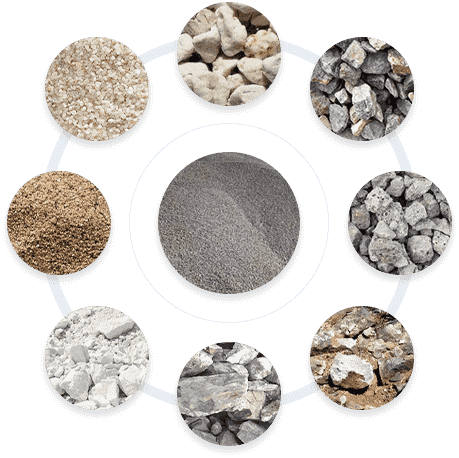
The main component of silica sand or quartz sand is SiO2, and the content of less than 98.5% is called silica sand. Silica sand processing plant mainly includes crushing, washing, grading, magnetic separation, flotation and other processes to remove fine or trace impurities in silica sand.

1. Crushing: Large silica sand is initially crushed using a jaw crusher or cone crusher to reduce the size of the material.
2. Screening: The crushed silica sand is graded using a vibrating screen to separate materials of different particle sizes.
3. Washing: Impurities such as clay and organic matter are removed from the silica sand using a sand washer or spiral sand washer.
4. Drying: The moisture content of the silica sand is reduced using a rotary dryer to meet the requirements of subsequent processing or storage.
Silica sand products, especially high-purity silica sand, require thorough dehydration. Drying is typically used to reduce the moisture content to approximately 0.5% to meet production specifications. Sand dryers are widely used in industries such as building materials and chemicals, and are designed to process large quantities of material. A rotating drum dries the wet sand through heat exchange with hot air. Jiutian's sand dryer features a rational design that ensures optimal material and airflow for optimal drying. Compared to traditional sand drying equipment, it offers high thermal efficiency, low investment costs, and superior environmental performance.
Zhengzhou Jiutian professionally provides a full set of silica sand processing plant equipment. Welcome to contact us for more detailed information.
Many mineral processing plants face a confusing problem: even with the same processing capacity, some copper concentrate drying lines consume far more fuel and power than others. The energy gap usually reaches 20%–40% in actual operation. The difference i
Utilizing boiler exhaust gas (120°C–180°C) from a power plant as the heat source for a fly ash dryer is a core strategy for reducing costs in fly ash recovery projects. However, three key issues must be addressed in practice:
Freshly washed sand retains too much surface moisture, unsuitable for direct storage, transportation or end-use processing. For sand production plants, professional sand drying equipment is essential to consistently reduce moisture and qualify finished sa
In the slag processing industry, traditional drying equipment often suffers from issues such as low thermal efficiency, rapid heat loss, and poor sealing, resulting in significant energy waste and high drying costs. In reality, the key to overcoming these