Focus on heavy equipment
Focus on heavy equipment


With the increase of sand market demand, how to dry sand quickly and increase the supply and quality is a problem that every sand factory user is more concerned about. At present, the commonly used method of drying fine sand quickly is to use sand dryer equipment for mechanical drying.

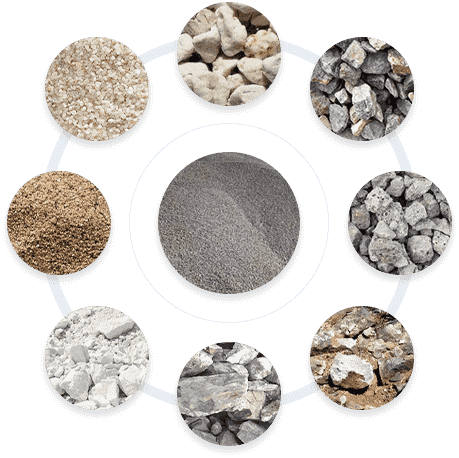
The sand dryer is generally used as a three-layer drum drying equipment, which is suitable for drying river sand, river sand, sea sand, yellow sand, carborundum, pomegranate sand, quartz sand, foundry sand, slag and other materials. It can reach below 0.5-1%. The dryer has large output, reliable operation, large operating flexibility and strong adaptability. Compared with the traditional fine sand drying treatment, fine sand drying has the advantages of short cycle, small footprint, uniform dry and wet, controllable moisture, and low labor cost. It can be applied to fine sand treatment of various scales.
Zhengzhou Jiutian is a professional manufacturer of large-scale sand drying equipment, customized production, unlimited production capacity, direct supply from the manufacturer, and all equipment is ex-factory price. If you are interested in our equipment, please feel free to contact us.
Desulfurization gypsum from power plants is an industrial by-product of flue-gas desulfurization. Characterized by high moisture content and a tendency to clump, it easily reabsorbs moisture and hardens when stockpiled. Long-term open-air storage not only
Foundries recycling used moulding sand often face one critical choice: standard single rotary dryer or three‑pass (triple‑drum) dryer. Both can dry reclaimed foundry sand, but their fit differs sharply based on your sand type, space, energy budget and qua
Many small limestone and heavy calcium carbonate processing plants have limited space and budgets. Large rotary drum dryers are unsuitable, and civil engineering modifications are expensive. Blindly investing in large equipment is not feasible for low-vol
Compared to standard industrial bentonite, the raw material used for cat litter demands much stricter processing standards. The finished product's market competitiveness hinges directly on factors such as clumping performance, dust levels, granule hardne