Focus on heavy equipment
Focus on heavy equipment


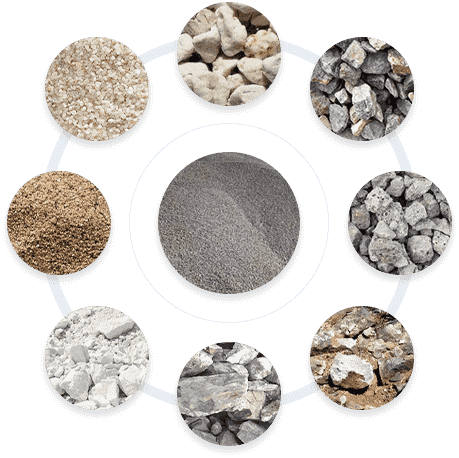
Ball mill is an important abrasive mechanical equipment widely used in various industrial fields. Its main function is to grind, grind or mix materials through the abrasives (such as steel balls, ceramic balls, etc.) in the ball mill barrel to achieve the required process requirements. Ball mill can be used to grind various ores, cement, ceramics, chemical raw materials, pigments and other materials.

The working principle of the ball mill is mainly to drive the abrasives and materials in the ball mill barrel to rotate together through rolling bearings, thereby achieving the purpose of grinding or mixing. The specific workflow is as follows:
Adding materials: Add the materials to be processed into the barrel of the ball mill through the feed port.
Grinding: After starting the ball mill, the rolling bearing drives the cylinder and the abrasive inside to start rotating. The abrasive and the material collide and rub against each other, and the material is gradually ground into finer particles until it reaches the required particle size.
Sorting: After grinding for a certain period of time, the ground materials and abrasives are separated through the discharge port on the cylinder.
Material collection: Collect the ground materials through the discharge port for the next step of processing or treatment.
The grinding effect and energy consumption of a ball mill are affected by many factors, such as abrasive shape, size, quantity, material viscosity, cylinder rotation speed, running time, etc. In actual operation, appropriate adjustments and optimizations need to be made according to the properties of the materials and process requirements to improve the grinding efficiency and economic benefits of the ball mill.
Desulfurization gypsum from power plants is an industrial by-product of flue-gas desulfurization. Characterized by high moisture content and a tendency to clump, it easily reabsorbs moisture and hardens when stockpiled. Long-term open-air storage not only
Foundries recycling used moulding sand often face one critical choice: standard single rotary dryer or three‑pass (triple‑drum) dryer. Both can dry reclaimed foundry sand, but their fit differs sharply based on your sand type, space, energy budget and qua
Many small limestone and heavy calcium carbonate processing plants have limited space and budgets. Large rotary drum dryers are unsuitable, and civil engineering modifications are expensive. Blindly investing in large equipment is not feasible for low-vol
Compared to standard industrial bentonite, the raw material used for cat litter demands much stricter processing standards. The finished product's market competitiveness hinges directly on factors such as clumping performance, dust levels, granule hardne