Focus on heavy equipment
Focus on heavy equipment


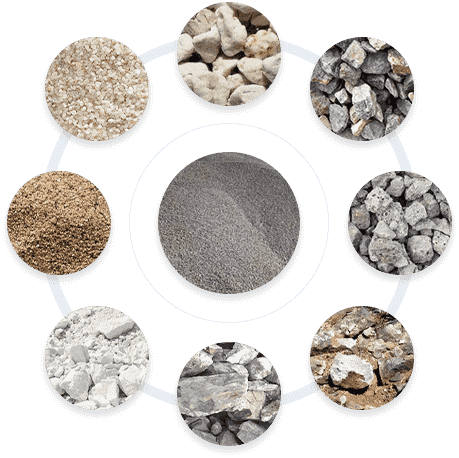
Limestone dryers are widely used in building materials, metallurgy, mineral processing, chemical industry, cement and other industries. They are mainly used for materials with high humidity and heavy specific gravity such as slag, limestone, clay, river sand, quartz sand, and water slag.

The limestone dryer mainly uses diesel, coal, biomass, etc. to generate power, use air to heat it, and transport it to the surrounding area, thereby reaching the appropriate temperature for dehumidification. The wet materials are sent to the hopper by a belt conveyor or bucket elevator, and then enter the feeding end through the feeding pipe of the feeding machine of the hopper. The inclination of the feeding pipe should be greater than the natural inclination of materials to facilitate materials to flow into the dryer smoothly. The dryer cylinder is a rotating cylinder, which is slightly inclined with the horizontal line. Materials are fed in from the higher end, and heat carrier enters from the lower end, and contacts with materials in counter-flow. There are also cases where the heat carrier and materials flow into the cylinder together. As the cylinder rotates, the materials move to the lower end under the action of gravity. When the wet materials move forward in the barrel, they receive the heat from the heat carrier directly or indirectly, and the wet materials dry. Then, the wet materials are sent out through the discharge end through a belt conveyor or screw conveyor.
Jiutian limestone dryer has large processing capacity and low drying cost. When drying unbound water, the thermal efficiency can reach 60%. The drying intensity is high. Since the material is highly dispersed in the air flow, the entire surface area of the particles is the effective area for drying, so the drying cost is low. Welcome to contact us is you are interested in our equipment.
Desulfurization gypsum from power plants is an industrial by-product of flue-gas desulfurization. Characterized by high moisture content and a tendency to clump, it easily reabsorbs moisture and hardens when stockpiled. Long-term open-air storage not only
Foundries recycling used moulding sand often face one critical choice: standard single rotary dryer or three‑pass (triple‑drum) dryer. Both can dry reclaimed foundry sand, but their fit differs sharply based on your sand type, space, energy budget and qua
Many small limestone and heavy calcium carbonate processing plants have limited space and budgets. Large rotary drum dryers are unsuitable, and civil engineering modifications are expensive. Blindly investing in large equipment is not feasible for low-vol
Compared to standard industrial bentonite, the raw material used for cat litter demands much stricter processing standards. The finished product's market competitiveness hinges directly on factors such as clumping performance, dust levels, granule hardne