Focus on heavy equipment
Focus on heavy equipment


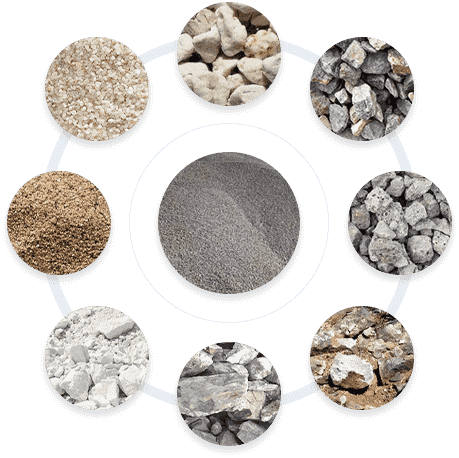
Aggregate is one of the main components of concrete. It mainly plays the role of skeleton and reduces the volume change caused by shrinkage and swelling of cementitious materials during the setting and hardening process. It also serves as a cheap filler for cementitious materials. There are natural aggregates and artificial aggregates. The former include crushed stone, pebbles, pumice, natural sand, etc.; the latter include coal slag, slag, ceramsite, expanded perlite, etc. Aggregate drying is useful to ensure the performance of concrete, improve the quality of mortar, prevent caking and deterioration, and facilitate transportation.

Aggregate drying requires an aggregate dryer, the most common of which is a drum dryer, which consists of a drying drum, a heat source device, a conveying device, a screener, etc. After the aggregate enters the drying drum from the feed end, the aggregate continues to roll and move forward in the drum as the drum rotates slowly. In this process, the aggregate is fully in contact with the hot air flow introduced from the heat source device, and the hot air flow transfers heat to the aggregate, causing the moisture in the aggregate to evaporate, thereby achieving the purpose of drying.
Advantages of Jiutian Aggregate Dryer
High efficiency and energy saving: Through the optimized design of heat recovery system and burner, the operating cost is reduced by 30% compared with the traditional drying method.
Environmental compliance: The multi-stage dust removal system is used to efficiently handle dust and exhaust gas to meet the requirements of environmental regulations.
High drying quality: Reasonable drying process and process design, combined with intelligent control system and feedback adjustment, ensure that the quality of dried aggregates meets industry standards
Strong durability: Made of high-quality materials to extend the service life of the equipment.
Zhengzhou Jiutian has many years of experience in the field of aggregate dryers, leading technology, and more than 1,000 successful cases around the world. We provide high-performance equipment at factory prices to help customers maximize their return on investment.
Desulfurization gypsum from power plants is an industrial by-product of flue-gas desulfurization. Characterized by high moisture content and a tendency to clump, it easily reabsorbs moisture and hardens when stockpiled. Long-term open-air storage not only
Foundries recycling used moulding sand often face one critical choice: standard single rotary dryer or three‑pass (triple‑drum) dryer. Both can dry reclaimed foundry sand, but their fit differs sharply based on your sand type, space, energy budget and qua
Many small limestone and heavy calcium carbonate processing plants have limited space and budgets. Large rotary drum dryers are unsuitable, and civil engineering modifications are expensive. Blindly investing in large equipment is not feasible for low-vol
Compared to standard industrial bentonite, the raw material used for cat litter demands much stricter processing standards. The finished product's market competitiveness hinges directly on factors such as clumping performance, dust levels, granule hardne