Focus on heavy equipment
Focus on heavy equipment


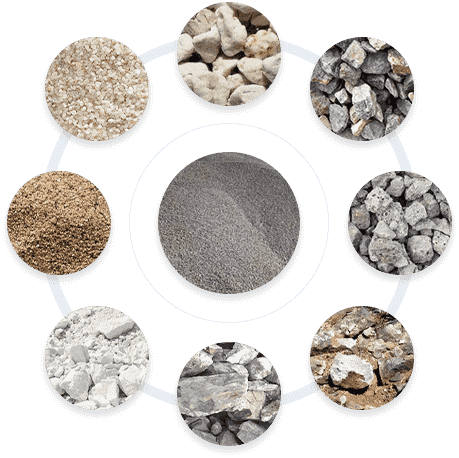
Limestone can be used for concrete aggregate, paving stone, cement, metallurgical flux, water treatment, soil conditioner, poultry feed additive, and light industry, chemical industry, textile, food, etc. Limestone drying is conducive to improving reaction efficiency, ensuring product quality, and facilitating storage and transportation.
Limestone dryer can be used to dry limestone, clay, slag, carbide slag, water slag and other materials. The material enters the dryer through the conveying equipment, and the heat carrier contacts the material in reverse. The water in the material is evaporated through heat exchange to achieve the purpose of drying. It is suitable for limestone materials with different humidity and particle size, which can meet the needs of large-scale continuous production, with high and stable output.

Jiutian limestone dryer adopts advanced combustion system and hot air circulation technology to reduce energy consumption and improve thermal efficiency; it adopts automatic control program and central control system to realize automatic operation, reduce manual intervention and improve production efficiency.
Applications
Building materials industry: used to produce lime, cement clinker, etc.
Chemical industry: limestone, as a chemical raw material, needs to be dried to meet quality requirements.
Metallurgical industry: used for drying materials such as slag and clay.
Agriculture and environmental protection: limestone powder can be used for soil improvement and environmental protection.
As a professional rotary dryer manufacturer, Jiutian limestone dryer has mature technology and many successful cases. Welcome to contact us and get price.
Desulfurization gypsum from power plants is an industrial by-product of flue-gas desulfurization. Characterized by high moisture content and a tendency to clump, it easily reabsorbs moisture and hardens when stockpiled. Long-term open-air storage not only
Foundries recycling used moulding sand often face one critical choice: standard single rotary dryer or three‑pass (triple‑drum) dryer. Both can dry reclaimed foundry sand, but their fit differs sharply based on your sand type, space, energy budget and qua
Many small limestone and heavy calcium carbonate processing plants have limited space and budgets. Large rotary drum dryers are unsuitable, and civil engineering modifications are expensive. Blindly investing in large equipment is not feasible for low-vol
Compared to standard industrial bentonite, the raw material used for cat litter demands much stricter processing standards. The finished product's market competitiveness hinges directly on factors such as clumping performance, dust levels, granule hardne